Webhooks and API Events
Table of Contents
- Finding the Webhooks page
- Adding a webhook
- Deleting a webhook
- Clearing suppression
- Have more questions?
DNSimple webhooks send an HTTP POST request to a URL you choose whenever an event happens in your account, such as a domain registration or a DNS record change. You manage webhooks on the Webhooks page of your account. For event types and payloads, see Webhooks and Events in the developer documentation.
Finding the Webhooks page
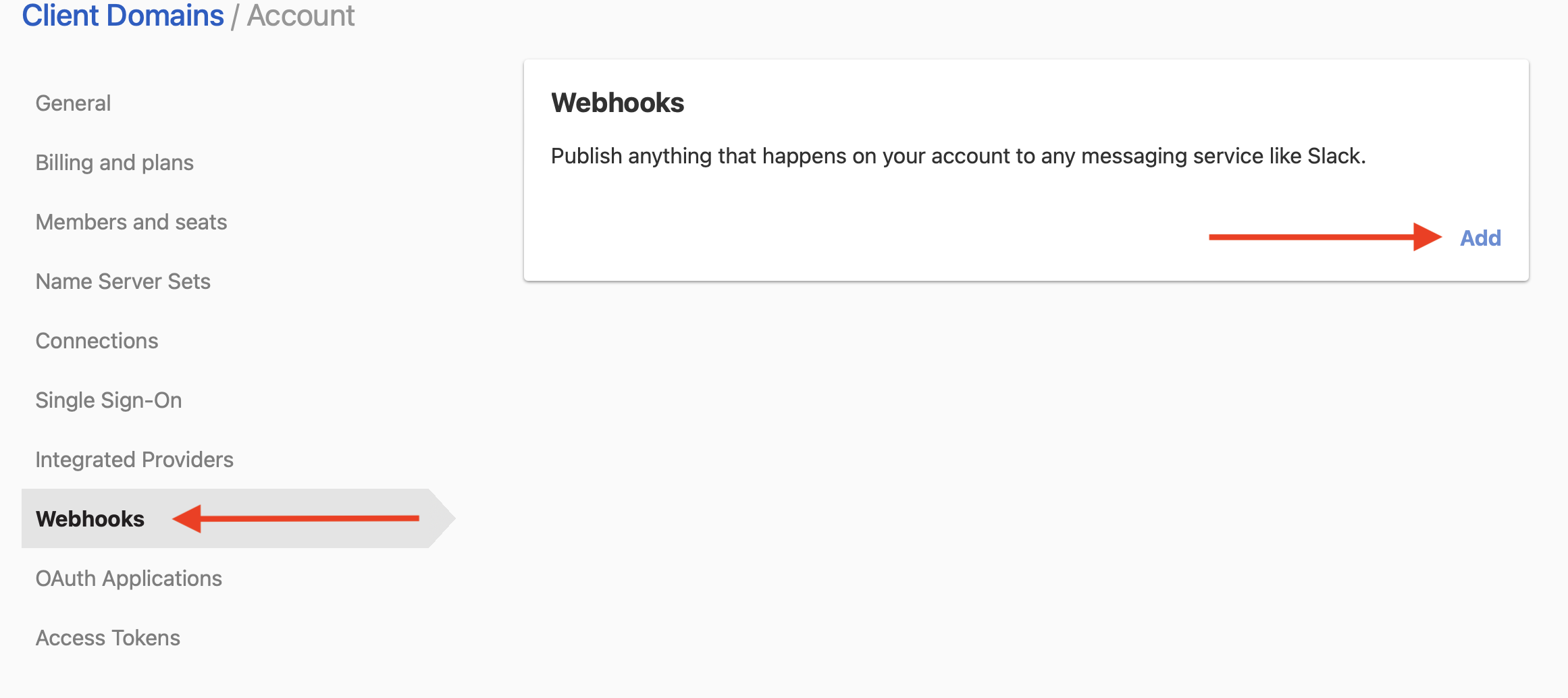
To open the Webhooks page
- Log into DNSimple with your user credentials.
- If you have more than one account, select the relevant one.
- Go to your account page.
- Click in the account menu.
The page lists every URL where DNSimple sends the events that happen in your account.
Adding a webhook
To add a webhook
-
On the Webhooks page, click .
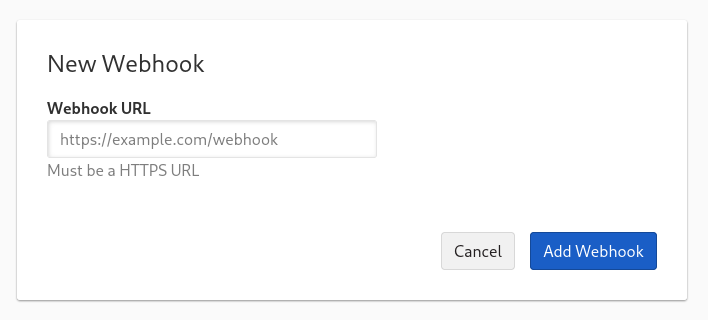
- In , enter the URL that should receive events. The URL must use HTTPS.
-
Click .
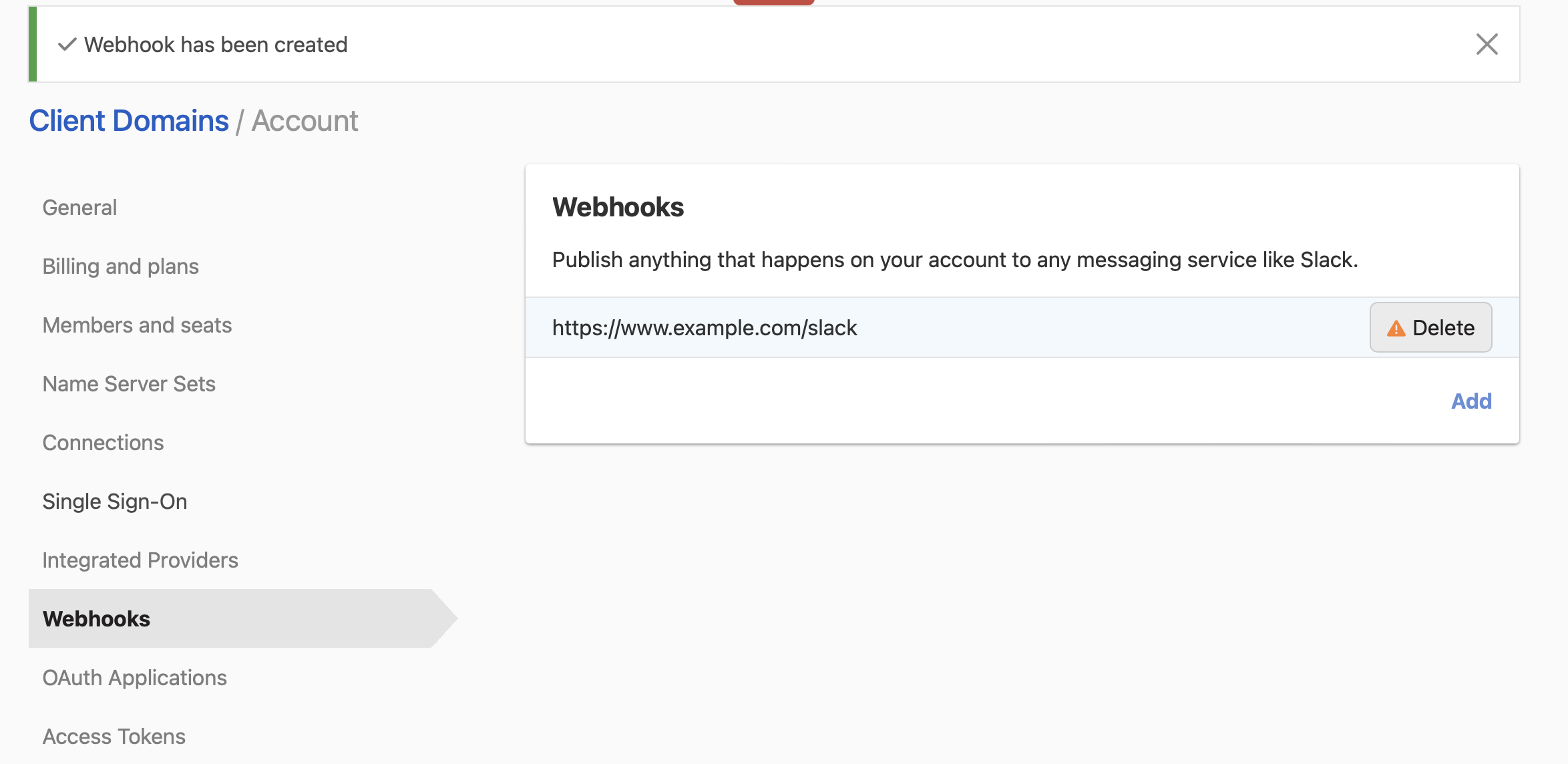
The new webhook appears in the list on the Webhooks page.
To receive events, your endpoint must respond with HTTP 200. DNSimple treats any other response as a failed delivery and retries it. You can also add webhooks with the API. See DNSimple API Best Practices.
Deleting a webhook
To delete a webhook
- On the Webhooks page, click the actions menu (three dots) next to the webhook.
-
Click .
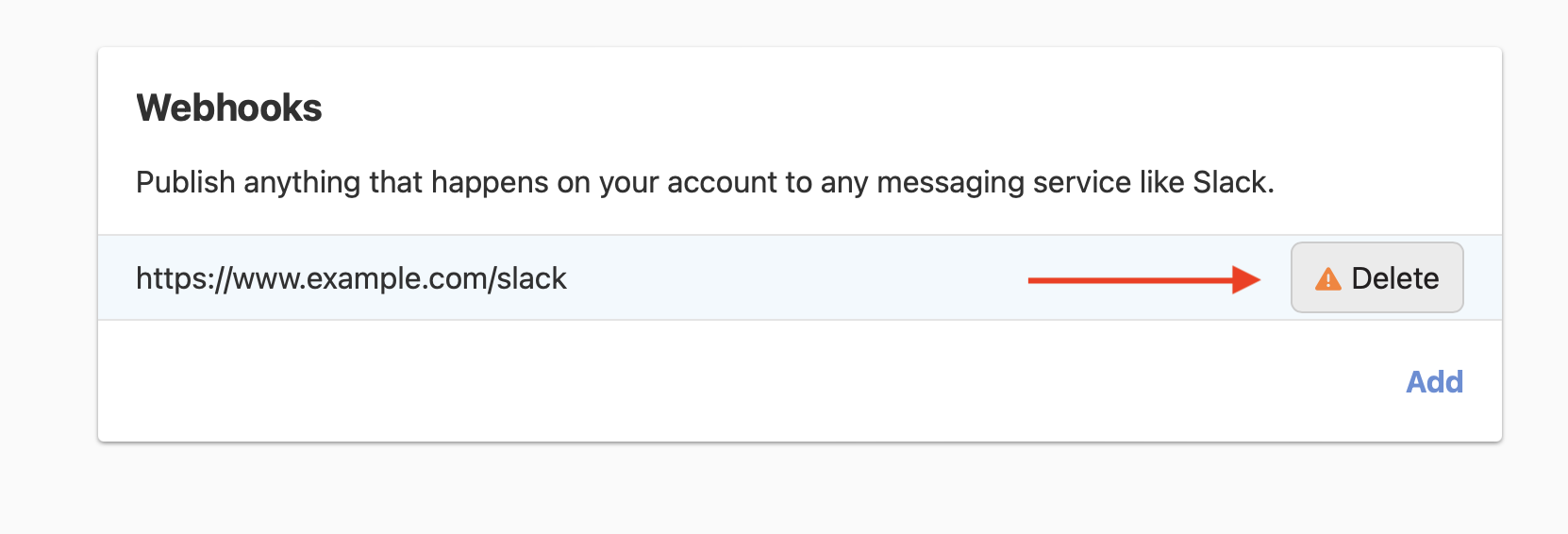
- In the dialog, confirm the action.
A deleted webhook cannot be recovered. To receive events at that URL again, add it as a new webhook.
Clearing suppression
If DNSimple cannot deliver events to a webhook, it retries the delivery. If deliveries keep failing, DNSimple suppresses the webhook and stops sending it events. The developer documentation describes the retry schedule and when suppression starts.
When a webhook is suppressed, the Webhooks page shows the message “Some of your webhooks are no longer receiving events.” A warning icon appears next to each suppressed webhook. Hold the pointer over the icon to see when the webhook stopped receiving events.
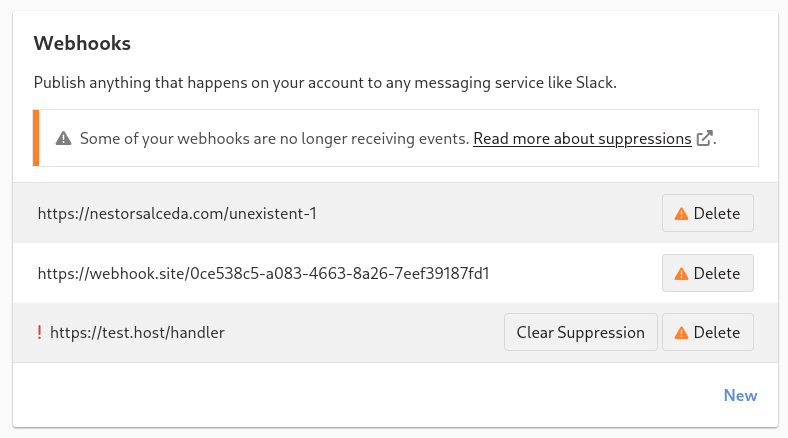
Fix the problem at your endpoint first, so it responds with HTTP 200. Then clear the suppression.
To clear suppression
- On the Webhooks page, click the actions menu (three dots) next to the suppressed webhook.
- Click .
- In the dialog, confirm the action.
DNSimple starts sending events to the webhook again.
Have more questions?
If you have additional questions or need any assistance with webhooks, contact support, and we’ll be happy to help.