Activity Tracking
Table of Contents
- Why activity tracking matters
- Domain activity tracking
- Account activity tracking
- Events filter
- Have more questions?
Note
Full activity history is available on the Teams plan and higher. Accounts on the Solo plan can view activity logs from the past 30 days. See the difference between plans.
Activity history is an audit log of changes made to a specific domain or across your entire account. It helps you see who made a change, when it happened, and what was updated.
Why activity tracking matters
Activity tracking provides accountability in team environments and supports account security. It helps you identify who made specific changes, when they were made, and what exactly changed. This is valuable for troubleshooting issues, understanding the impact of changes, and maintaining security by detecting unauthorized modifications. The audit log creates a historical record that can be reviewed to understand how a domain’s configuration evolved over time.
Activity tracking shows changes made through the DNSimple interface and API. It does not track changes made outside of DNSimple, such as direct registry modifications or changes made through integrated domain provider interfaces.
Domain activity tracking
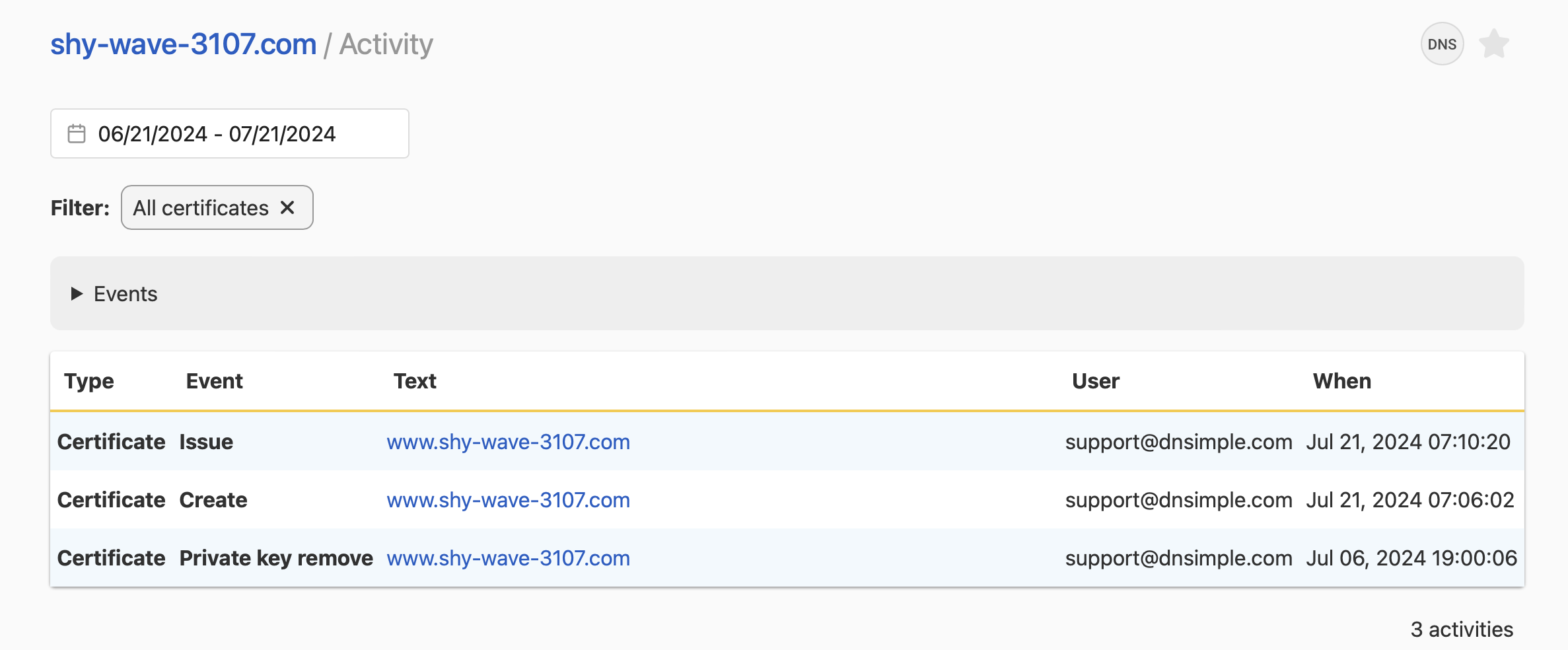
Domain-level activity tracking logs changes to a specific domain, including DNS record updates, contact changes, name server changes, and other domain operations. Each entry shows what changed, which user made the change, and when it occurred.

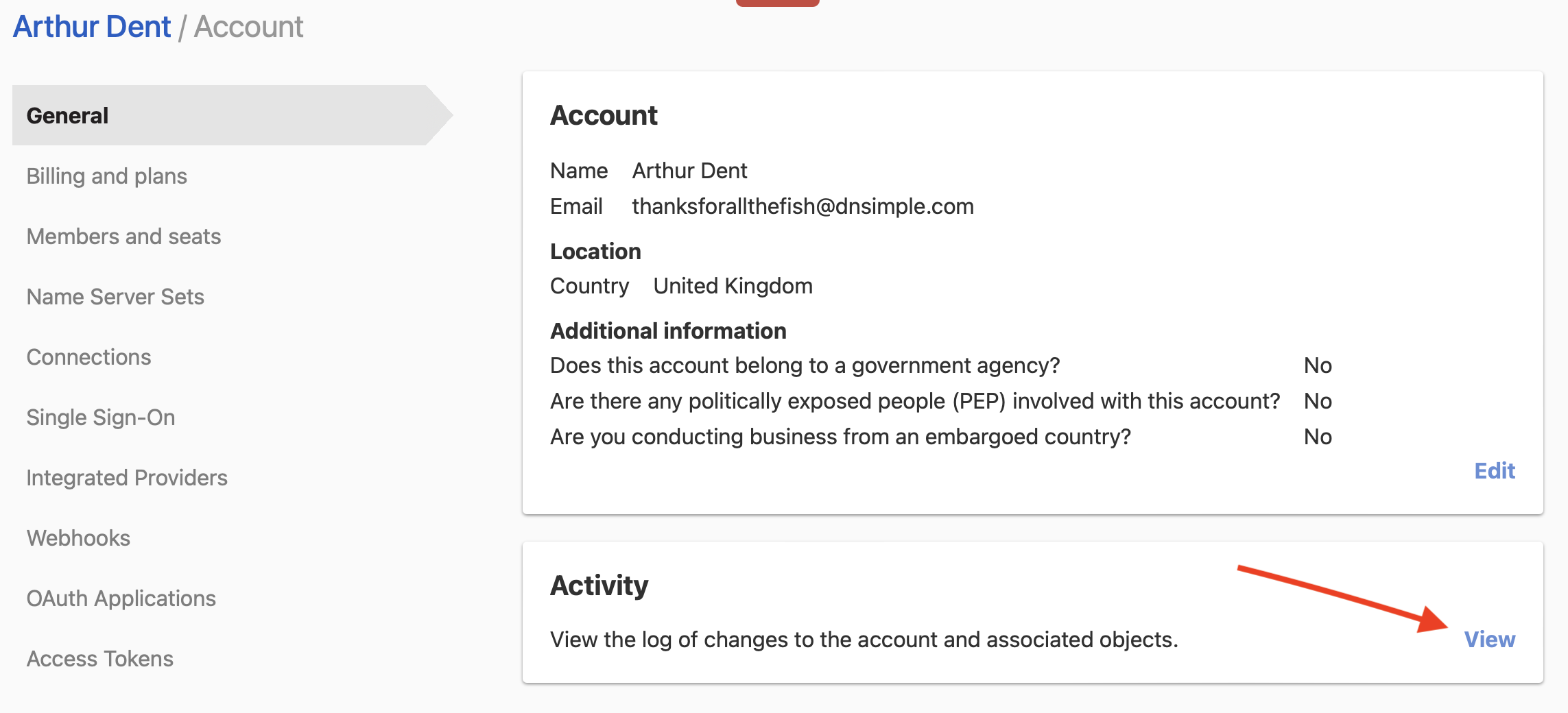
Account activity tracking
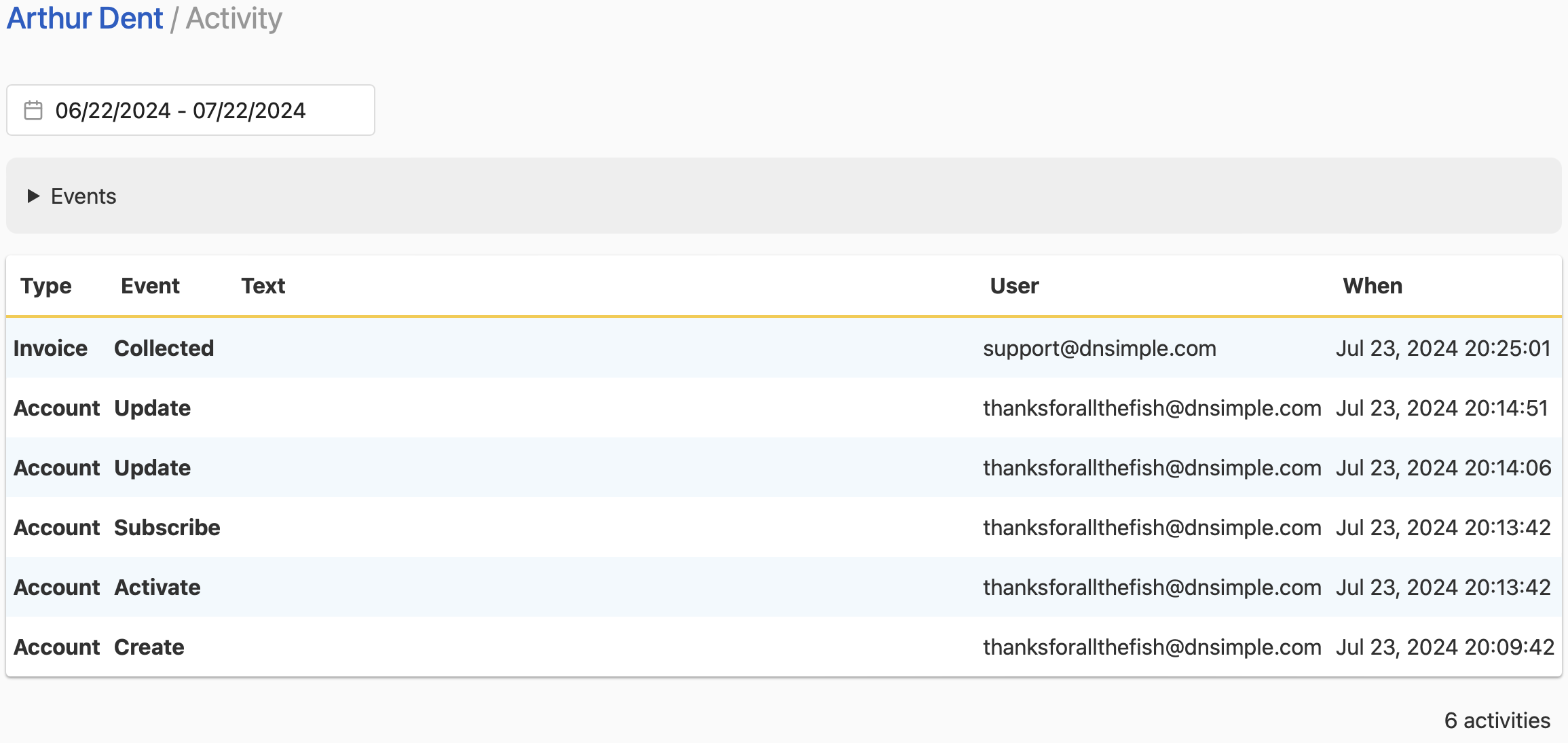
Account-level activity tracking logs changes across your entire account, including:
- Adjustments to account settings
- Modifications affecting multiple domains
- User actions and permission changes
This view helps you understand changes that affect the account as a whole, not just individual domains.
Events filter
The Events filter shows event types within a chosen time frame. Filter by DNS changes, user actions, or other event types. Each entry includes:
- What changed, along with contextual data (for example record content)
- Which user triggered the event
- When the event took place
Have more questions?
If you have any questions about your activity tracking, contact our support team, and we will be happy to help.